
DOWNLOAD THE APP


Customer Services
Copyright © 2025 Desertcart Holdings Limited
DOWNLOAD THE APP
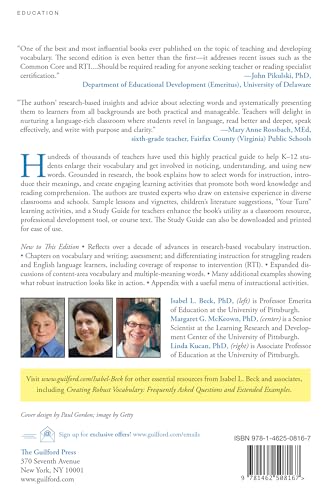
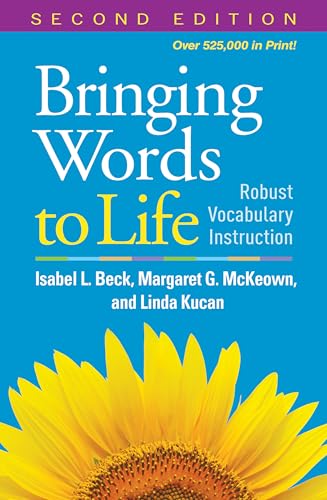
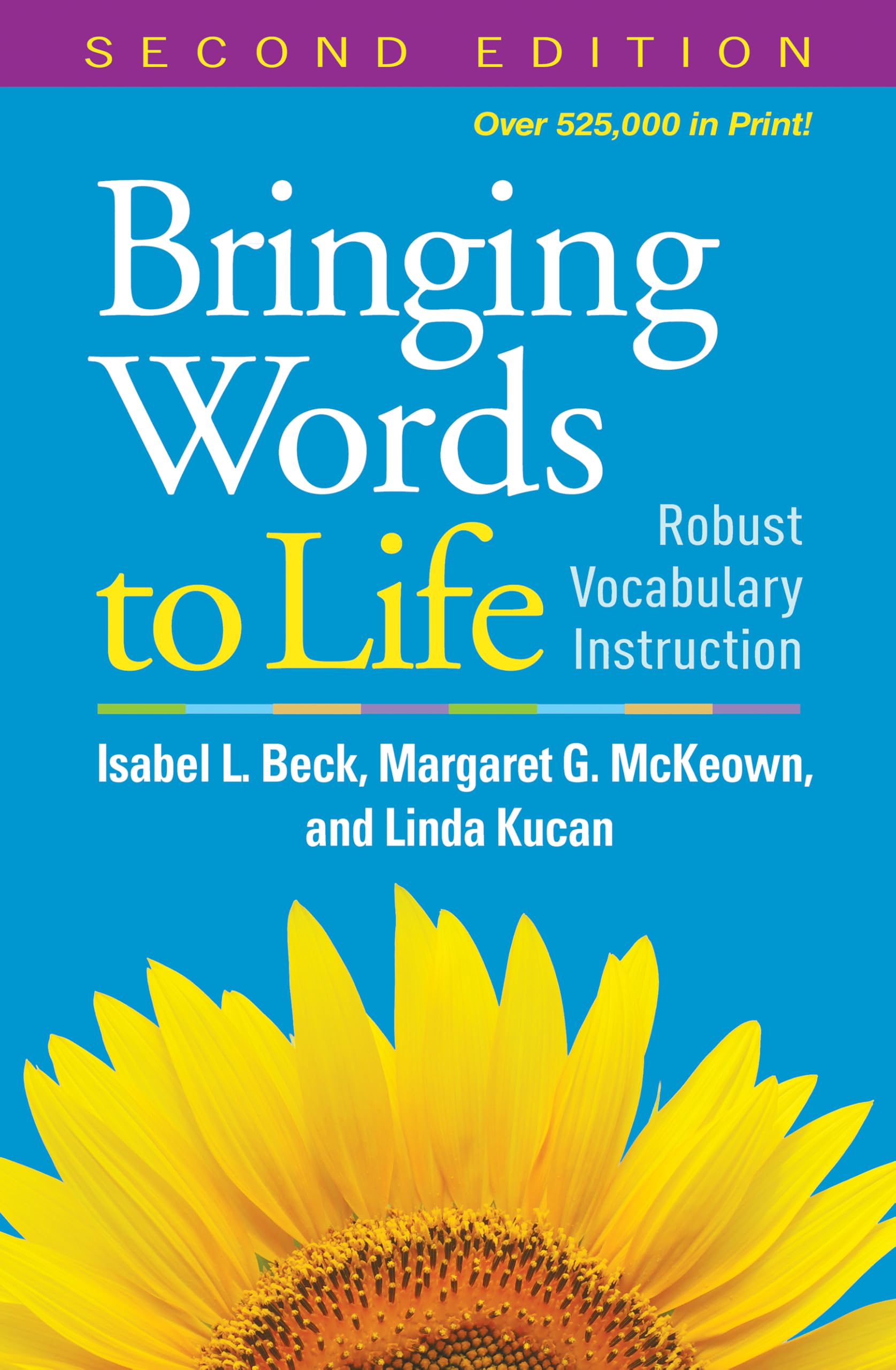
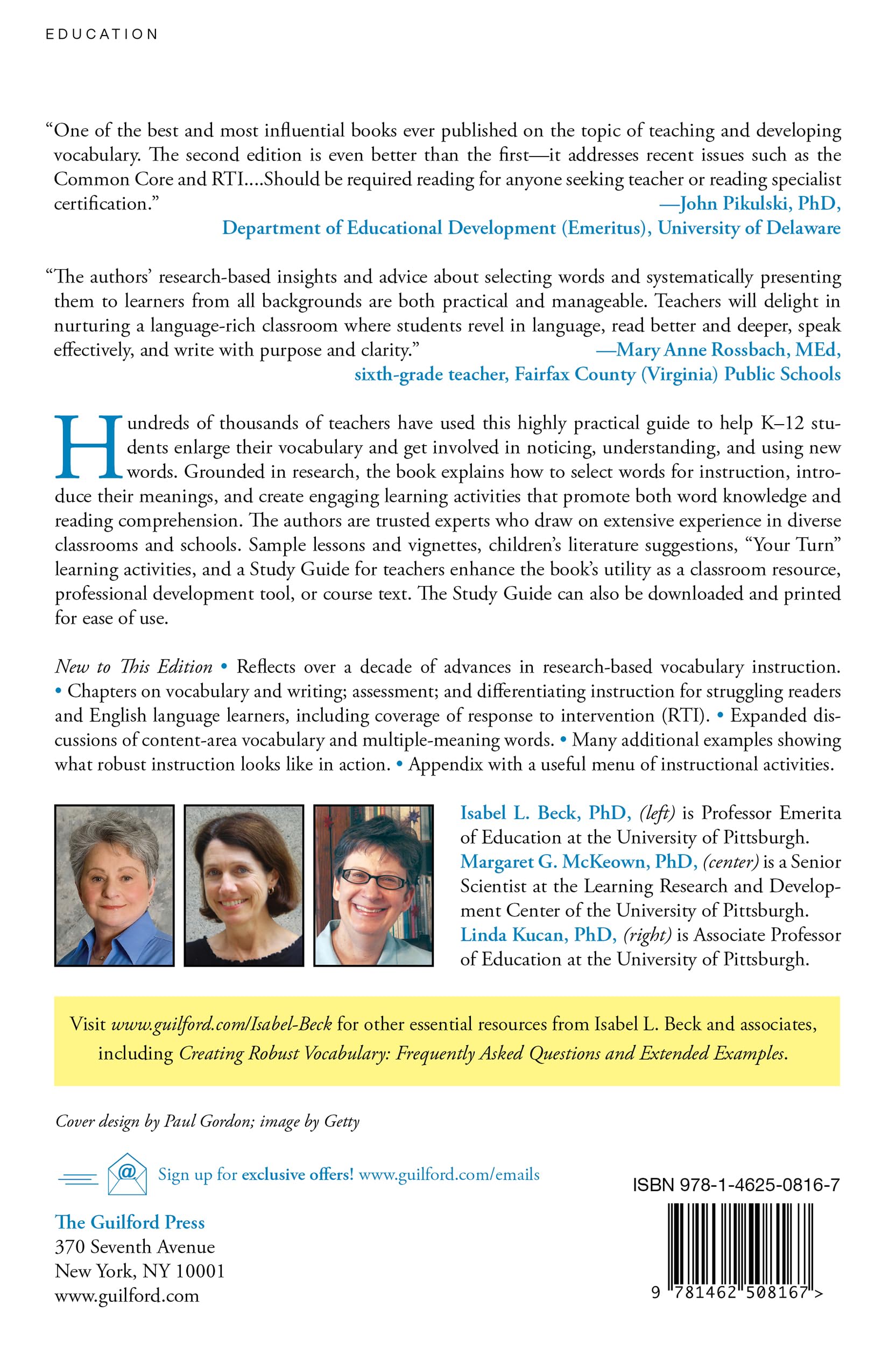
desertcart.com: Bringing Words to Life: Robust Vocabulary Instruction: 9781462508167: Isabel L. Beck, Margaret G. McKeown, Linda Kucan: Books Review: Exceptional, outstanding, impressive, exemplary, notable . . . - This is the second edition of the well-regarded Bringing Words to Life: Robust Vocabulary Instruction. In addition to incorporating the newest research on vocabulary instruction, it now addresses the Common Core standards and the Response to Intervention (RTI) structure. A new chapter, on "Vocabulary and Writing," discusses the intuitive sense that most teachers have that a rich vocabulary improves writing, although it also notes the paucity of research on this topic. Bringing Words to Life makes a powerful case for the need for systematic direct instruction in vocabulary and persuasively debunks the idea that students can readily learn the meanings of new words simply from context and reading exposure. Unlike so many education texts, it is well written, with clear summaries of current research along with excellent descriptions and examples of how to carry out "robust" vocabulary instruction in the classroom. Bringing Words to Life encourages high expectations for even the youngest students, who can readily learn to move from the everyday (Tier One) words that they frequently encounter to what the authors call "Tier Two" words; for instance, "talking about" something can become "mention." This book won't write a teacher's lesson plans but it can fill them with ideas. Like any new curricular idea, learning to incorporate rich vocabulary takes practice, both for teachers and for students. As a practitioner of the Orton Gillingham method of dyslexia remediation, I wondered why the book makes no reference to the use of morphology (prefixes, suffixes, Latin roots, Greek combining forms) as an efficient way to expand a student's vocabulary. In response to my inquiry, one of the authors indicated that a companion book, Creating Robust Vocabulary: Frequently Asked Questions and Extended Examples (which I have not seen), does examine the use of morphemes. This author also indicated that she considered this to be a useful approach. Anyone who works with students who have limited vocabularies should own this book. It contains that rare combination of theory and practice that distinguishes the best books about teaching. M. Feldman Review: Great for beginning teachers! - I am a new teacher and I’m using this book to expand my knowledge. It is a great asset for educators!
| Best Sellers Rank | #39,174 in Books ( See Top 100 in Books ) #20 in Common Core #62 in Educational Certification & Development #216 in Instruction Methods |
| Customer Reviews | 4.7 4.7 out of 5 stars (698) |
| Dimensions | 6.13 x 0.5 x 9.25 inches |
| Edition | 2nd |
| ISBN-10 | 1462508162 |
| ISBN-13 | 978-1462508167 |
| Item Weight | 11.5 ounces |
| Language | English |
| Print length | 210 pages |
| Publication date | March 14, 2013 |
| Publisher | The Guilford Press |
M**N
Exceptional, outstanding, impressive, exemplary, notable . . .
This is the second edition of the well-regarded Bringing Words to Life: Robust Vocabulary Instruction. In addition to incorporating the newest research on vocabulary instruction, it now addresses the Common Core standards and the Response to Intervention (RTI) structure. A new chapter, on "Vocabulary and Writing," discusses the intuitive sense that most teachers have that a rich vocabulary improves writing, although it also notes the paucity of research on this topic. Bringing Words to Life makes a powerful case for the need for systematic direct instruction in vocabulary and persuasively debunks the idea that students can readily learn the meanings of new words simply from context and reading exposure. Unlike so many education texts, it is well written, with clear summaries of current research along with excellent descriptions and examples of how to carry out "robust" vocabulary instruction in the classroom. Bringing Words to Life encourages high expectations for even the youngest students, who can readily learn to move from the everyday (Tier One) words that they frequently encounter to what the authors call "Tier Two" words; for instance, "talking about" something can become "mention." This book won't write a teacher's lesson plans but it can fill them with ideas. Like any new curricular idea, learning to incorporate rich vocabulary takes practice, both for teachers and for students. As a practitioner of the Orton Gillingham method of dyslexia remediation, I wondered why the book makes no reference to the use of morphology (prefixes, suffixes, Latin roots, Greek combining forms) as an efficient way to expand a student's vocabulary. In response to my inquiry, one of the authors indicated that a companion book, Creating Robust Vocabulary: Frequently Asked Questions and Extended Examples (which I have not seen), does examine the use of morphemes. This author also indicated that she considered this to be a useful approach. Anyone who works with students who have limited vocabularies should own this book. It contains that rare combination of theory and practice that distinguishes the best books about teaching. M. Feldman
S**S
Great for beginning teachers!
I am a new teacher and I’m using this book to expand my knowledge. It is a great asset for educators!
K**R
love
this is fantastic info!
D**S
The return of vocabulary.
Any jerk can "teach" vocabulary: just throw some words at a student, make them define them, and give them a quiz in one week. Bringing Words to Life attempts to revise the teaching of vocabulary to such an extent that many of the exercises presented here will be unfamiliar to the conventional instructor. I was somewhat skeptical of some of these at first (such as word relationships, or word situations), but the critical-thinking skills involved are almost as valuable as the vocabulary retention they promote. I truly have no complaints about this book, and can only thank the authors for doing their research. I have used these methods in my classroom. They work. What a fantastic book.
G**.
An excellent resource
Every new educator should be reading this book. The ideas are so clear and powerful that implementing them actually seems possible. Very reader friendly text that helps rekindle the spark of language aquisition educators! A must read for ESL instructors!
J**S
Teachers read !!
Every teacher must read!!
K**.
was the best, most meaningful approach to use
As an elementary ESL teacher, I understand the importance of teaching vocabulary. What I was not certain of, however, was the best, most meaningful approach to use. This book discusses ROBUST vocabulary instruction - and gives a routine and variety of activities to deliver the instruction. I'm only a third of the way through - it's meaty - but I'm already formulating how I will be adjusting my instruction of words according to the methods offered here. Excellent resource - one of those that I will keep going back to because it just makes sense!!!!!!!!!!!
G**Z
The superstition of context clues.
This is wonderful. It overcomes the superstition to use contexts clues while reading. You should only use context clues while looking up a word in the dictionary to find which definition is the right one for the context the word is being used in the sentence. For example if I say respect the religious beliefs of others. And then I say but I don't Like it, you could be confused unless you know that respect also means leave alone as in respect his space. You don't mean honor the religion but give him the space to practice it. It's how you get along with others. This book shows that using context clues is less than twenty percent effective. What a false view of the world you get, the more you read. Here, I'll leave you with this one. Look it up after you use context clues to figure it out. The children in the schoolyard were active until the CREPUSCULE came and then they all went home.
S**~
Delivery came two days early (bonus!). The corners of the book cover have minor creases in them, but I presume that's due to delivery handling. Other than this everything is great!
M**N
Absolutely excellent book which presents academic research in a very accessible and practical way.
R**L
A must read for every teacher!
J**N
Fantastic book full of good ideas as to how to teach "two tier" vocabulary. I use it every week. I am a secondary school teacher in charge of literacy across the curriculum.
J**S
A good combination of current research and practical classroom ideas k-12.
Trustpilot
4 days ago
3 weeks ago